uPVC windows in Horsham for the post-war and 1970s estates
Chamfered uPVC casements suit the plain openings of 1950s and 1960s houses.
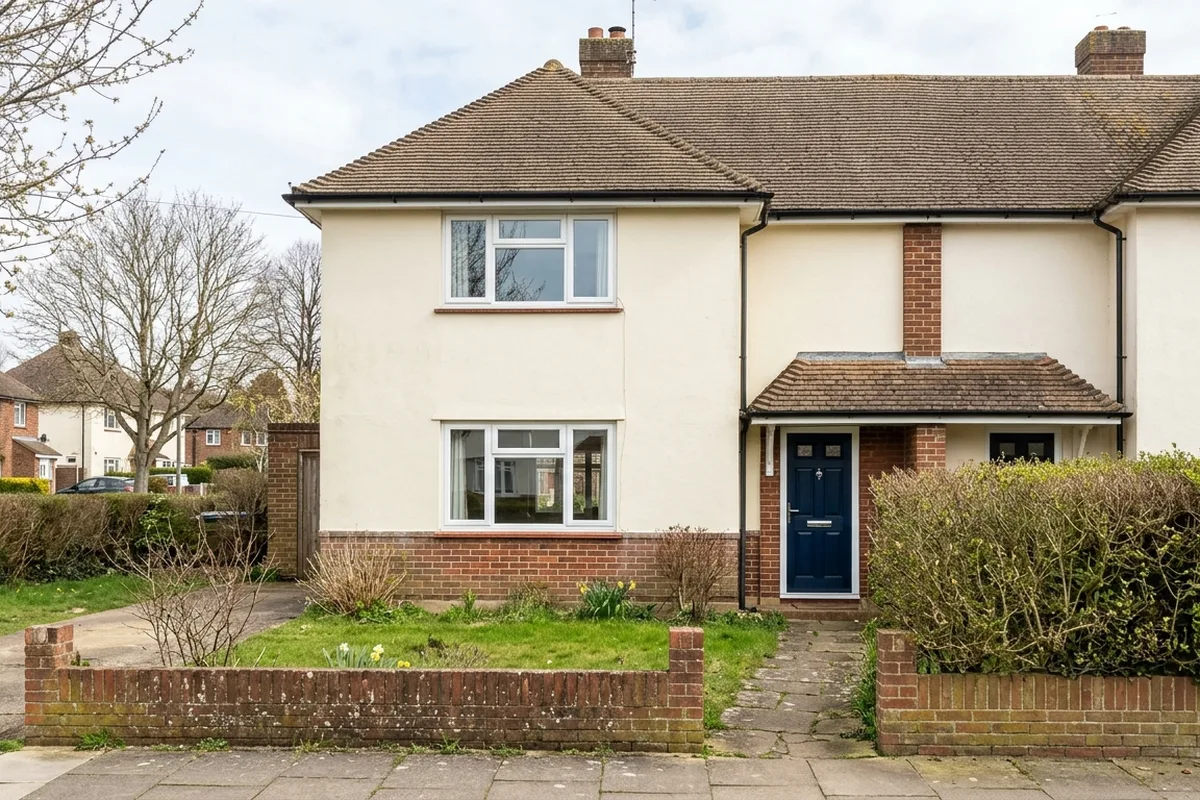
A large share of Horsham was built between the mid-1950s and the early 1980s. The Needles estate was laid out from about 1955 with private and council houses. Coote's farm estate, north of Guildford Road, was laid out by the mid-1950s, and Spencer's farm estate had 141 council homes by then. North Heath followed in the 1970s, partly built by the Greater London Council. These houses have plain rectangular openings with no glazing bars, and that is where a standard uPVC casement looks most at home.
Chamfered or flush
A chamfered casement has a bevelled edge to the frame, and the opening sash sits slightly proud of it. It is the familiar shape of most double glazing on Horsham's estates, and it is the least expensive way to replace like for like. A flush casement sits level with its frame, closer to the original timber look. It costs more and repays the difference on older houses, but on a 1960s or 1970s house the chamfered profile is usually the honest match. Flush casements are covered on their own page.
White, grey or woodgrain
White is what most of these estates had first time round. Anthracite grey is a popular choice on 1980s detached houses, such as those in Southwater and at Hills Farm, when owners change the look of the whole house at once. Grey and woodgrain finishes cost more than white. On a semi or terrace it is worth looking at the neighbours first: one grey house in a row of white can look odd, and many of the 1950s council-built terraces still read as one design.
What the old frames tell the surveyor
Forty-year-old uPVC frames often have reinforcing that has rusted, or subframes packed out where the original timber was taken out in the 1980s. The surveyor checks the opening once the old frame is described, and anything like a rotten sill or a cracked lintel is priced after the survey rather than guessed at now.
Illustrative example of a typical job
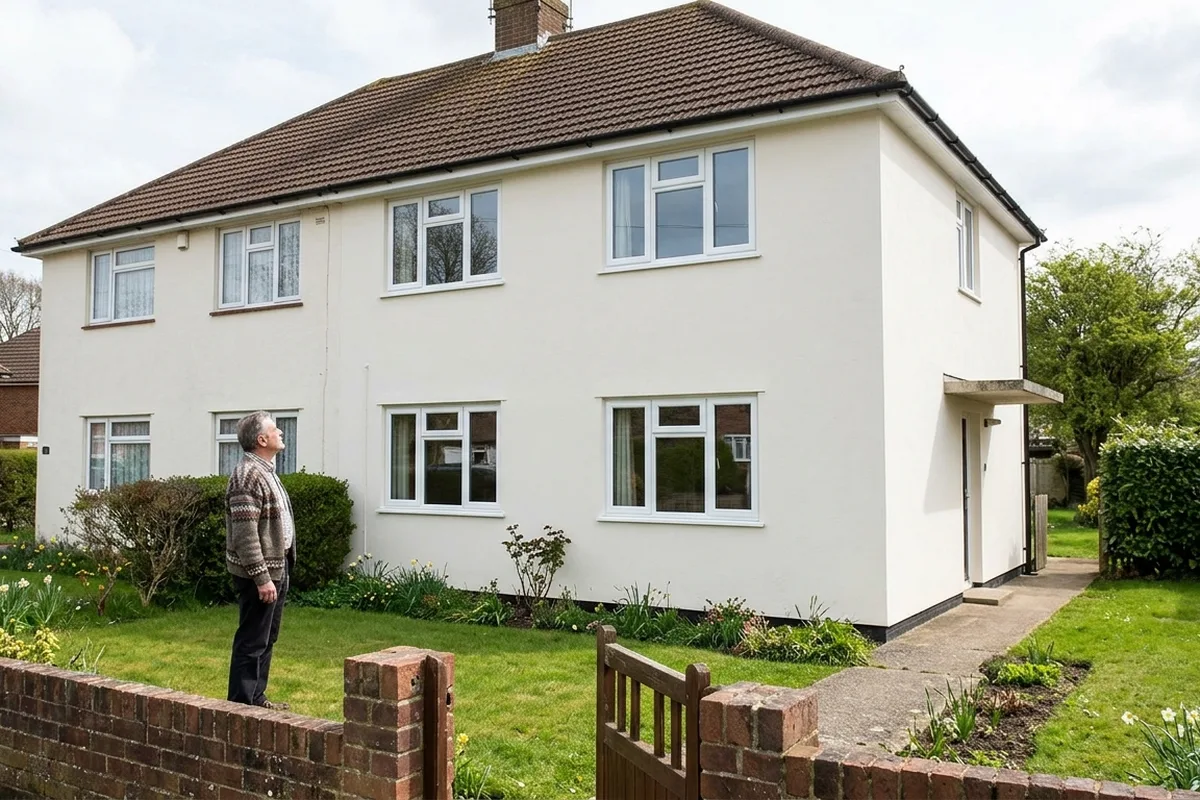
Front of a 1950s semi on the Needles estate
House: A 1950s semi-detached house of the type laid out on the Needles estate from about 1955.
What is fitted: Four chamfered uPVC casements in white, about 1000 by 1200 mm: two downstairs, two up. The original openings are kept and the casement pattern matches the neighbours.
Typically £3,250 to £4,800, supplied and fitted, including VAT.