Bay windows in Horsham for 1920s, 1930s and Victorian houses
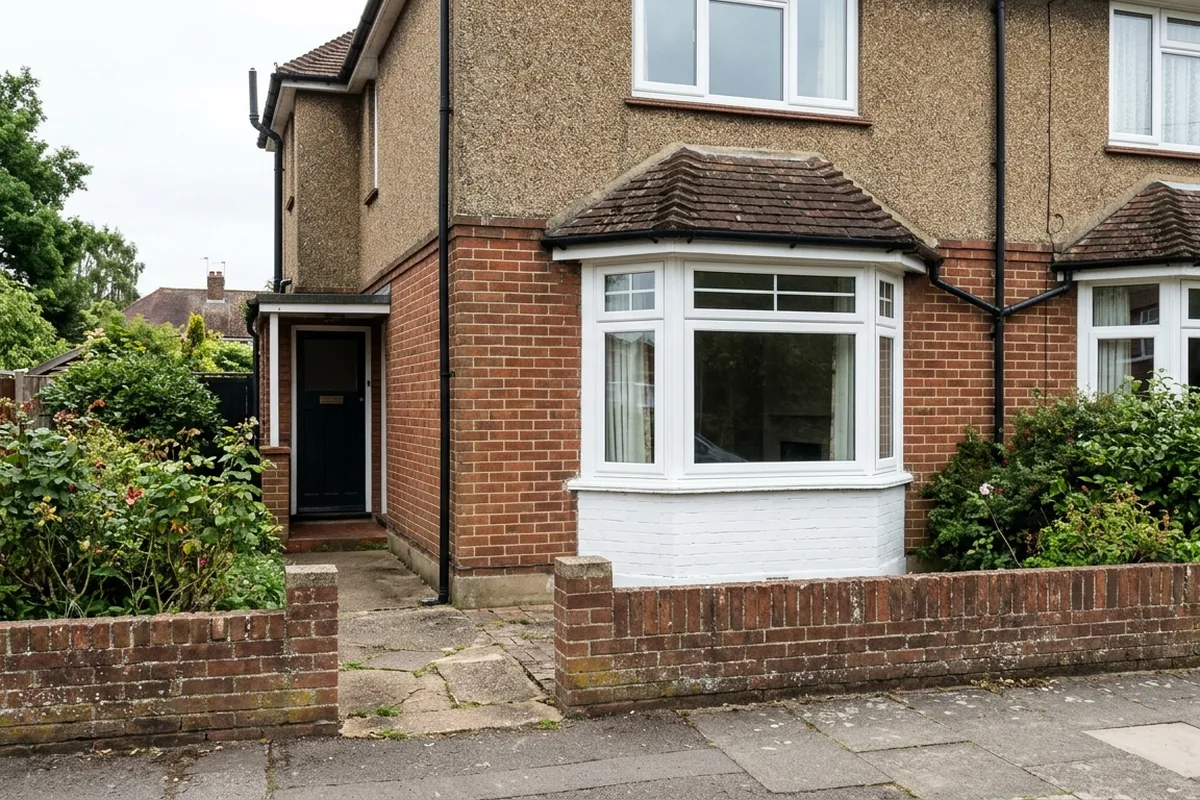
A three-unit canted bay on a 1920s semi.
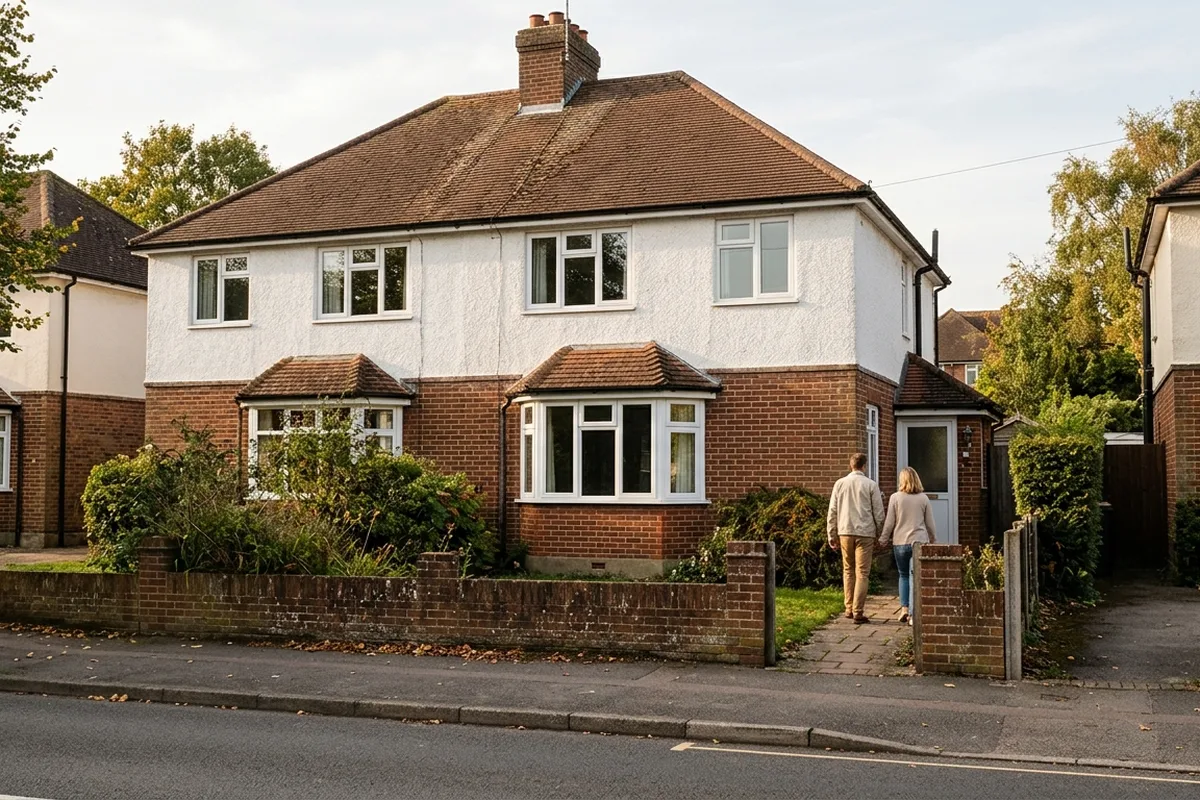
The canted bay is the defining window of interwar private housing, and Horsham has plenty of it: the Hills estate along Guildford Road dates from 1925 and Hurst Avenue was laid out by 1932. Semis of that period very often have a three-sided bay on the ground floor and sometimes a matching one above. The Victorian villas of the Richmond Road conservation area have two-storey bays too, described in the council's appraisal as characteristic of the area.
The bay is a structure, not just a window
On many 1920s and 1930s houses the bay window frame carries part of the load of the roof or the bay above. Old timber bays were built that way, and when the first replacement went in, some fitters added steel posts in the corners and some did not. The surveyor checks whether the bay needs support. If it does, that is priced after the survey and is not part of any figure on this site.
uPVC or aluminium
A uPVC flush canted bay suits most interwar semis and keeps a joinery look. A slimline aluminium bay gives more glass and suits houses where the other windows are going to aluminium too. Curved bays, which turn up on some 1930s houses, are possible in aluminium and are surveyed on their own.
Keeping the bars right
Interwar bays often had leaded lights or a top bar in each pane. If yours did, the replacement looks best with the bar line kept at the same height across all three faces.
Illustrative example of a typical job
Bay and bedrooms of an interwar semi off Guildford Road
House: A 1920s semi-detached house of the kind built on the Hills estate along Guildford Road from 1925.
What is fitted: A three-unit uPVC flush canted bay on the ground floor, about 2000 by 1400 mm, and two uPVC flush casements upstairs. Bay support, if the survey finds it is needed, is priced after the survey.
Typically £5,600 to £9,350, supplied and fitted, including VAT.